+91 8618751811
natureadmire@gmail.com

- Home
- Destinations
- bird watching
- City tours
- Children Camp
- Day trekking from Bengaluru
- Explore Gudibande Fort, Avalabetta, Lepakshi, and the Adiyogi Laser Show
- Discover Gudibande Fort, Avalabetta, Rangasthala, Srinivasasagara Dam, and the Adiyogi Laser Show
- Achalu betta day trekking ~ Sathanur, Kanakapura taluk
- Bidarakatte day trekking from Bengaluru
- Day Trekking at Makalidurga from Bengaluru with Nature Admire Adventure
- Kaiwara day trekking from Bengaluru- Ecotourism trail
- Savandurga trekking-Billigudda & Karigudda- Paradise for rock climbers
- Sunrise / Sunset trekking at Hutridurga
- Seven Summits
- High Altitude Himalayan trekking – Nepal
- Himalayan trekking expeditions
- Milam Glacier- A himalayan trekking – Kumaon, Uttarakhand
- 7 days Sandhakpu Circuit trekking – Eastern Himalayan Trails
- The Panchachuli Peaks trekking: A Spiritual Abode in Kumaon – Himalayan trekking
- Manimahesh Kailash Yatra 2025 -A Himalayan trekking
- Pindari Glacier Trek 2024 – A Himalayan Exploration
- Sundherdhunga trekking – Nanda Devi Sanctuary – Kumaon- Himalayan trekking
- Chardam Yatra’24~ Gharwal, Uttarakhand
- Western Ghats trekking
- Kudremukh trekking (Horse face) – Karnataka
- Pushpagiri – Karnataka’s tough trekking (Somwarpet route)
- Ballalarayanadurga trekking ~ Western Ghats (Weekend trekking from Bengaluru)
- Didupe & Eramayi watefalls trekking & Mud games ~ DK – Karnataka
- Kemmenagundi ~ K R Hill station ~ Bhadra Wildlife Sanctuary- Tannigebhail range.
- Sharavathy valley camping adventures – Honnemarudu
- Kumaraparvatha- Karnataka’s tough trekking
- Kodachadri trekking – Shivamoga
- International tours
- Library
- Brain teasers
- Do’s and don’ts
- Do’s and don’t’s for wildlife tours
- Do’s and don’t’s for Wildlife photography and Safari tours
- Do’s & Don’t’s for bird watching (Ornithology)
- Do’s and don’t’s for trekking
- Do’s and don’t’s for travelers
- Do’s & don’t’s for Mountaineering
- Do’s and don’t’s for Pilgrimage tours
- Do’s and Don’t’s for Rock climbing
- Do’s and Dont’s ~ Road trips / Long drives / Caravan tours
- Do’s and Don’t’s for Kayaking & Rafting
- Guide to travel safely
- Learn by posters
- Adventure
- Camping styles ~ Tent, Glamping, RV, Car, Hammock, Backpacking
- A guide to the first aid kit for backpackers and travellers
- Navigation ~ Map reading & GPS use in the outdoors
- Climbing knots – Essential for rock climbing, mountaineering, trekking
- Rock climbing techniques for beginners
- Kayaking ~ A gateway to adventure
- Cooking style in the Outdoor & wilderness
- wildlife & birds
- Endemic species of India
- 7 spectacular butterflies of India
- Endemic birds of the Western Ghats
- Coral reef wonders in the Arabian Sea
- Butterflies of the Western Ghats
- Birds and their Amazing Beaks and Feet
- Endemic species of fishes in the Western Ghats
- Nocturnal Mammals of the Western Ghats
- Wild orchids species of the Western Ghats – Karnataka, Kerala, Maharasthra, and Goa
- Mammal tracking – the art of identifying animals by the signs they leave behind in the forest
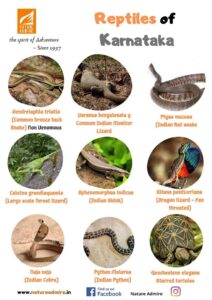
- Reptiles in the Western Ghats (Karnataka, Kerala, Maharasthra and Goa)
- Exploration
- Adventure
- Work with us
- About Us
- Outbound training camp
- Stores